
This white wine comes from the Cheverny region of France's Loire Valley. Winemaking in Cheverny dates back as far as the sixth century, but the region is one of the newest appellations in the valley, attaining that status in 1991. French wine law states that all wines produced in Cheverny must be blends. Domaine Le Portail Proprietor Michel Cadoux and his clay-based soil produce a very nice blend of 80% Sauvignon Blanc and 20% Chardonnay. It's available by the glass at Le Clafoutis in West Hollywood's Sunset Plaza for just $8.
We had the best table in the house for lunch, right by the wide front doors. They had been swung into the open position to let in the sunlight and the cool breeze. Tables were available on the sidewalk just through those doors, but we were near enough to experience the outdoors with all the comfort of indoors.
That Cheverny Blanc has a nose with some light grass and herbal notes, with a strong aroma of minerals. On the palate there is plenty of fruit, along with flavors of green olive - Denise says it's Lucques olives - and a hint of capers. It was right on target with the chicken piccata and the chopped salad with chicken and beets.
We had the best table in the house for lunch, right by the wide front doors. They had been swung into the open position to let in the sunlight and the cool breeze. Tables were available on the sidewalk just through those doors, but we were near enough to experience the outdoors with all the comfort of indoors.
That Cheverny Blanc has a nose with some light grass and herbal notes, with a strong aroma of minerals. On the palate there is plenty of fruit, along with flavors of green olive - Denise says it's Lucques olives - and a hint of capers. It was right on target with the chicken piccata and the chopped salad with chicken and beets.




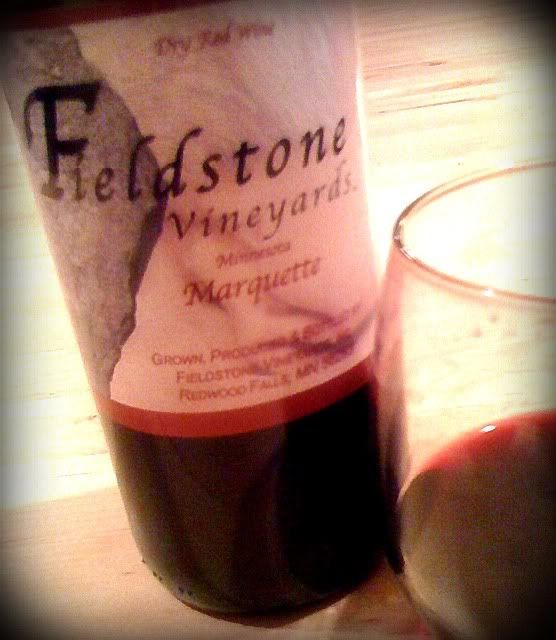 Fieldstone Vineyards


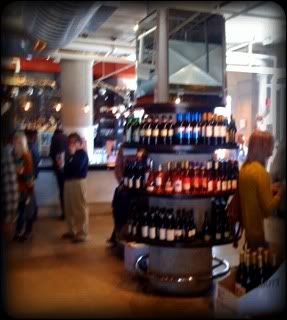

 A couple of tasty food samples were provided along with the wines. Arancini - Italian rice balls - were provided to those tasting. They paired beautifully with the Viognier, and when adorned with the duck Bolognese sauce, went well with the Sangiovese. Executive Chef Greg Stillman and Sous Chef Vincent Logan (pictured) are to be commended for turning out a large quantity at high quality. Logan told me early Saturday afternoon, "We did 800 of the Arancini, and we're running out. So Greg's in the kitchen working on another batch."

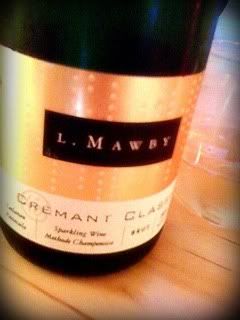 The L. Mawby Cremant Classic is made from 100% Leelanau Peninsula Vignoles from the Cremant Vineyard. It's an impressive wine, with frothy white bubbles, sweet citrus notes and almonds on the nose, lots of nuts in the flavor profile and a pleasant lemony feel on the palate. It shows a very pleasant sensation of ginger beer on the finish. The grapes used in making this wine - and the other three I'll mention - are hand-harvested and whole cluster pressed. Only the cuvée - the initial, gently pressed juice - is used in making the Cremant Classic. It retails for $22.
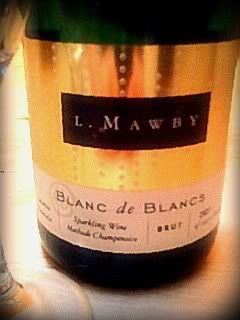 L. Mawby Blanc de Blancs - like the Cremant Classic - is also produced in the méthode champenoise. It's a non-vintage sparkler of 100% Chardonnay from the Leelanau Peninsula AVA. Only the cuvée is used and it is bottle fermented and aged a minimum of 24 months. This wine sports a nutty nose with lemon-lime citrus notes and a yeasty feel on both the nose and palate. It's bright and festive, and retails for $19.
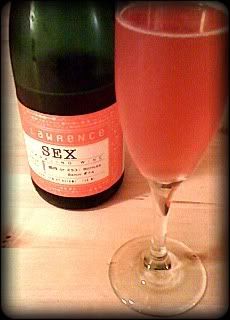 The M. Lawrence Sex is a rosé bubbly made from 75% Pinot Noir and 25% Chardonnay grapes. This one is a tad sweeter, getting a Brut dosage of 1.4% RS. Again, only the cuvée is used, but this wine is produced using cuve closefermentation - receiving its second fermentation in a closed tank.
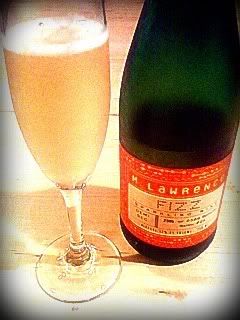 Fizz is also under the M. Lawrence label, and it's their sweetest sparkling wine. Produced from 75% Pinot Noir and 25% Chardonnay grapes, Fizz differs from the other three L. Mawby wines I tasted, in that the tailles juice is used - the second fraction of juice pressed, after cuvée - and it's finished with a Demi-Sec dosage, 3.5% RS.

 The 1200 growers in Toro produce wines which have a much darker fruit expression in than those found in in Rioja. Most of the wines tasted at this seminar were between 14% and 15.5% in alcohol content. Toro has whites made from Verdejo and Malvasia. Garnacha is also employed here, but the reds are all about Tinta de Toro, and this tasting was all about the reds.
 The Wines:


 Biltmore Reserve Chardonnay 2009 North Carolina
 Biltmore Estate Château Reserve Blanc de Blancs 2008 North Carolina Méthode Champenoise Brut