The Hope family has a 30-year track record growing grapes and making wine in Paso Robles, California, in the big Central Coast region. They go a little farther north, though, for the grapes which make up theirTreana White.
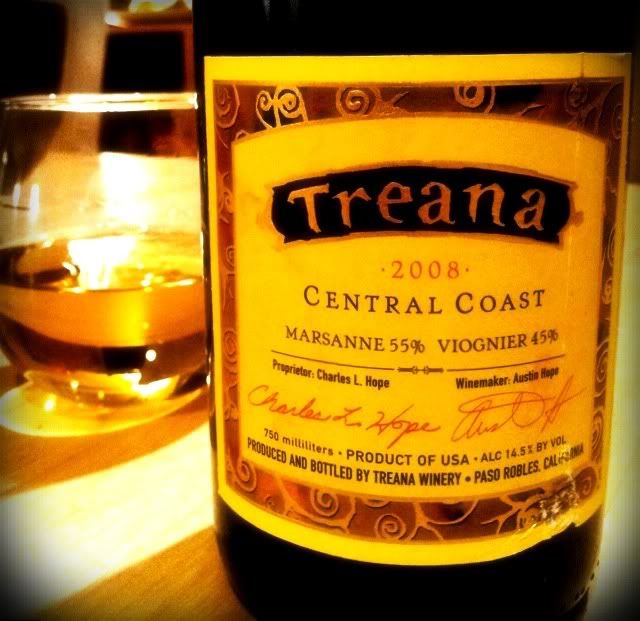
The Rhone varieties which make up Treana White - 55% Marsanne and 45% Viognier - come from Monterey County. The Mer Soleil Vineyard is in the northern end of the Santa Lucia Highlands, close to Monterey Bay and the cool growing conditions which provide a great place for them to reach their peak.
Since it's a winery in a warmer, more southern area reaching northward for grapes, it's fitting that the blend pairs grapes that figure prominently in the northern Rhone Valley - Viognier - and the southern Rhone - Marsanne.
The grapes are whole-cluster pressed and fermented in French oak, except for a small portion that is fermented in a stainless steel tank. The alcohol level is 14.5%.
Proprietor Charles L. Hope and winemaker Austin Hope are identified on the label by name and signature. They can be proud to have their names displayed there.
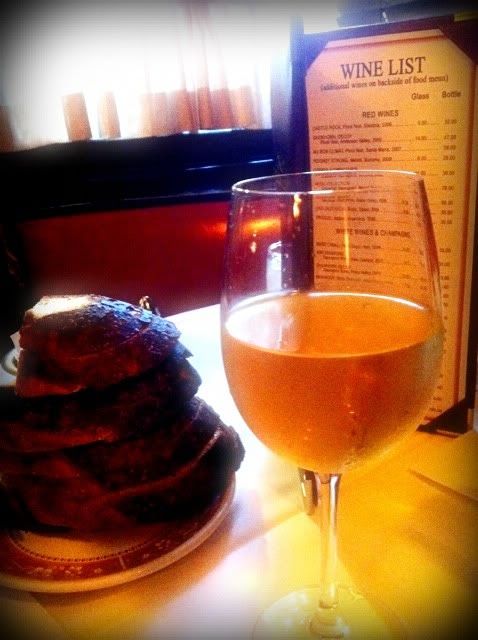
The color is beautifully golden, with hints of copper showing at times. After admiring the hue for some time, I put my nose in the glass and was struck by the incredibly aromatic nose of the wine. The tropical fruit aroma tries to fight its way past the honey-laden dried apricot. The honey aspect is almost mead-like in its intensity.
The wine looks quite viscous in the glass, clinging to the side on the swirl while slowly receding after. It feels viscous in my mouth, too. An oily texture gives way to a shimmering acidity. The flavors are complex, with first that dried apricot, then dried pineapple, then a slightly savory flavor fades into an acidity which intensifies on the finish.
I’ve had this wine a few times at tasting events - and was duly impressed. Having an entire glass really underscores how much is missed by simply having a small taste. The wine provides a new sensation with each sip.
It’s a big wine - big aromas, big flavors and big use of oak. If you like a noticeable effect of wood in your wine, this won’t disappoint. My palate tends to extremes. When I want less oak, I want unoaked. When I want oak, I want a tree. This wine doesn’t fall too far from the tree.
Follow Randy Fuller on Twitter.
The Rhone varieties which make up Treana White - 55% Marsanne and 45% Viognier - come from Monterey County. The Mer Soleil Vineyard is in the northern end of the Santa Lucia Highlands, close to Monterey Bay and the cool growing conditions which provide a great place for them to reach their peak.
Since it's a winery in a warmer, more southern area reaching northward for grapes, it's fitting that the blend pairs grapes that figure prominently in the northern Rhone Valley - Viognier - and the southern Rhone - Marsanne.
The grapes are whole-cluster pressed and fermented in French oak, except for a small portion that is fermented in a stainless steel tank. The alcohol level is 14.5%.
Proprietor Charles L. Hope and winemaker Austin Hope are identified on the label by name and signature. They can be proud to have their names displayed there.
The color is beautifully golden, with hints of copper showing at times. After admiring the hue for some time, I put my nose in the glass and was struck by the incredibly aromatic nose of the wine. The tropical fruit aroma tries to fight its way past the honey-laden dried apricot. The honey aspect is almost mead-like in its intensity.
The wine looks quite viscous in the glass, clinging to the side on the swirl while slowly receding after. It feels viscous in my mouth, too. An oily texture gives way to a shimmering acidity. The flavors are complex, with first that dried apricot, then dried pineapple, then a slightly savory flavor fades into an acidity which intensifies on the finish.
I’ve had this wine a few times at tasting events - and was duly impressed. Having an entire glass really underscores how much is missed by simply having a small taste. The wine provides a new sensation with each sip.
It’s a big wine - big aromas, big flavors and big use of oak. If you like a noticeable effect of wood in your wine, this won’t disappoint. My palate tends to extremes. When I want less oak, I want unoaked. When I want oak, I want a tree. This wine doesn’t fall too far from the tree.
Follow Randy Fuller on Twitter.


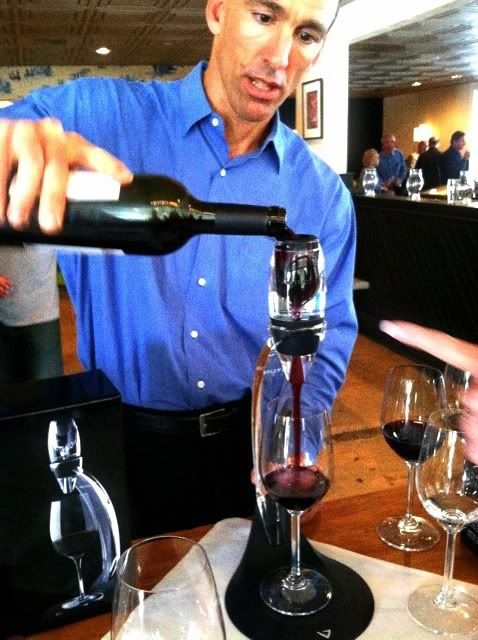 Vinturi was at the event, showing their line of wine aerators. Since I had not tried the Vinturi yet, I lined up for the side-by-side comparison. I must admit that although I had heard and read that the units worked quite well, I was still skeptical.



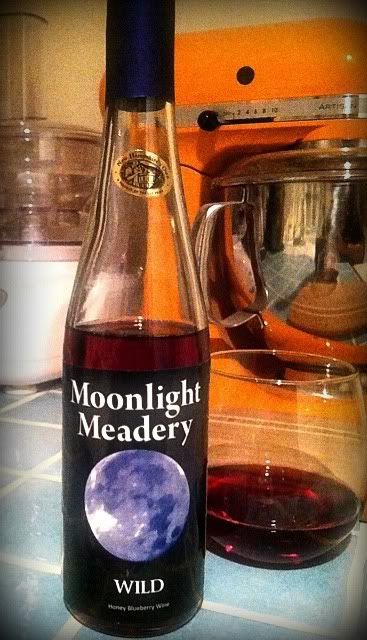 The mead he calls Wild is honey and blueberry wine made from unprocessed New Hampshire wildflower honey and mountain grown blueberries. It carries an alcohol level of 14.2% abv.
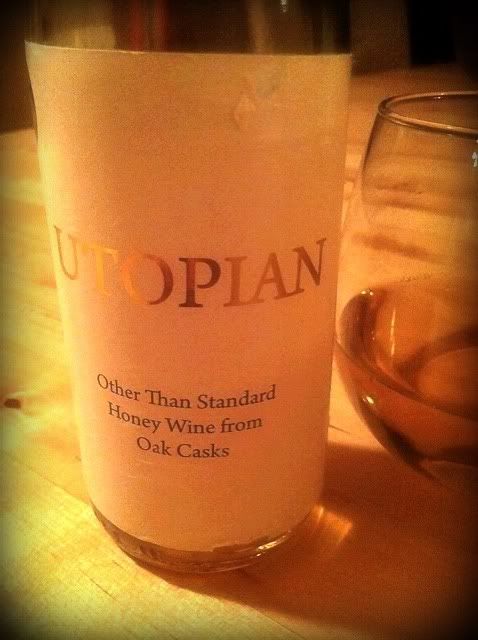 Utopian is the strongest of the quartet I tried at 16.9% abv. It’s a semi-sweet, limited edition mead which is fermented and aged in Samuel Adams Utopias barrels.
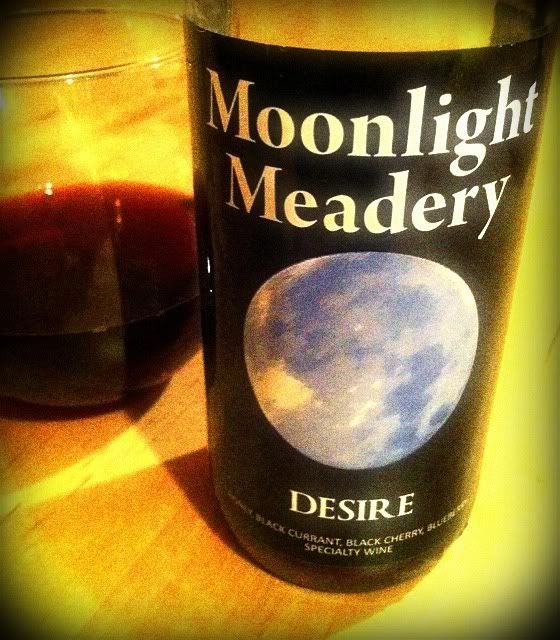 Desire is a beautiful deep ruby color. The nose again has a firm underpinning of honey aroma with a pretty straightforward display of the fruit used in making this melomel - black currant, black cherry and blueberry. The palate is dominated by the currant to the degree that it bears a striking similarity to cassis. It's not as viscous as Wild, but it definitely sits very full in the mouth. The 16.7% alcohol content means it's a fairly stiff drink, at least in the realm of wine. There's good acidity here, but I don't think I could bring myself to eat while savoring the texture and flavor of Desire. Well, maybe some chocolate. Desire beat out 352 other wines in a New England competition.
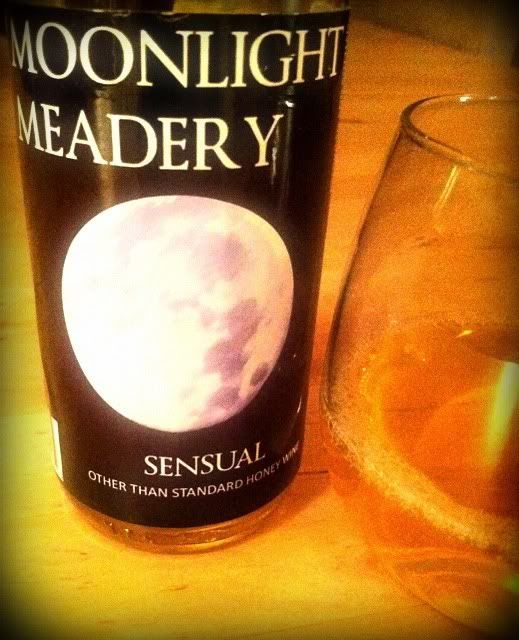 The golden mead called Sensual shows a whole honeycomb full of honey aroma. That’s no surprise, since it is a traditional mead, made only from wildflower honey, water and yeast. The palate is dripping with honey, too. Once again, a resounding acidity is present and the finish is very long and ridiculously satisfying. The taste of pure honey is all that remains after a drink, and it’s there for quite a while. The alcohol level for Sensual is 15.3% abv. It's the simplest of the four featured here, but it may be my favorite.

 After a bit of conversation about the
  New Zealand's
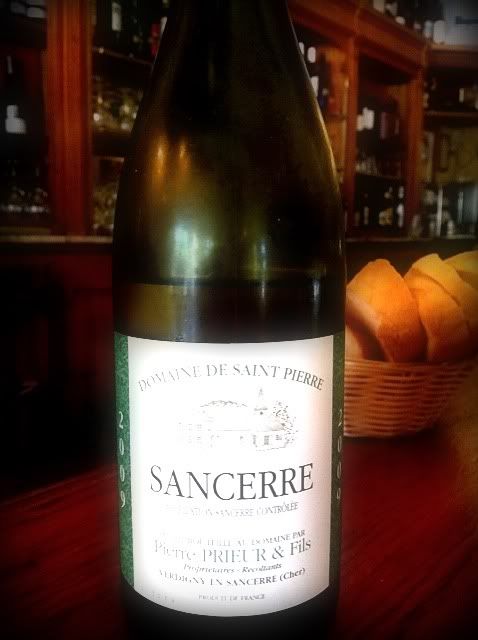
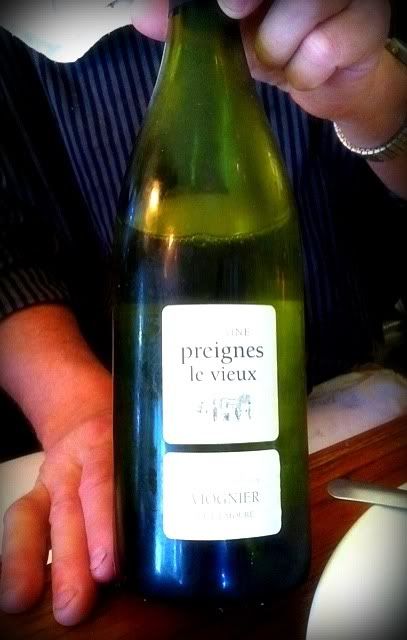 The Sancerre is a pretty golden-green hue in the glass. It's made from 100% Sauvignon Blanc and shows its Loire Valley terroir with a mineral-laden nose and an herbal component that's like a fistful of string beans. Big and full in the mouth, it's very dry with a nice acidity. Lemon rind and white grapefruit dominate the fruit profile, while wet rocks linger on the finish. It's a great match with the mussels and curry sauce.